
Sickle Cell Anemia
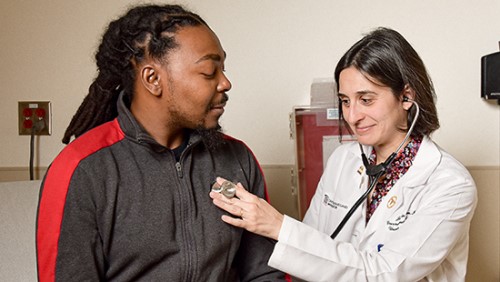
At UMMC, patients receive care from a team that is devoted to treating the complexities of sickle cell disease.
In sickle cell anemia, red blood cells change shape (from a biconcave disc to a crescent or sickle) due to the presence of abnormal hemoglobin.
Because of this change, affected red blood cells break down faster than normal, preventing the body from having enough red blood cells (anemia).
The misshapen red blood cells sometimes clump together in the veins, resulting in severe pain and other disease-specific complications.
Sickle cell anemia is a genetic condition that requires lifelong care.
We will help you or your loved one manage this disease with the goal of decreasing complications over one's lifetime.
We provide multiple perspectives in caring for our patients with sickle cell anemia and work closely with teams throughout the hospital. In addition, we champion initiatives with our emergency department to provide rapid care for patients presenting with sickle cell pain crisis (vaso-occlusive pain crisis).
To make an appointment with a sickle cell disease specialist, please call 410-328-7904. If you are an existing patient, please call 410-328-7609.
Sickle Cell Anemia Treatment
Sickle cell anemia is a chronic condition and requires regular medical attention.
Treatment options are available to help improve your quality of life. Treatments provided at UMMC for sickle cell disease include:
- Medical therapy
- Red blood cell exchange
- Bone marrow transplant (stem cell transplantation)
- Same-day infusion services
Clinical Trials for Sickle Cell Disease
As an academic medical center, our goal is to offer our patients the opportunity to participate in clinical trials investigating new treatments not yet available, new ways of using existing treatments, or allowing investigators a better understanding of diseases in order to develop new treatments.
For our sickle cell disease patients, these clinical trials include:
- GCC 2116: A randomized placebo-controlled study to evaluate the safety and effectiveness of the study drug, FT-4202 (Etavopivat) to improve anemia and reduce vaso-occlusive pain crises in patients with sickle cell disease (all genotypes). Learn more at ClinicalTrials.gov.
- GCC 1367: A study to allow researchers at the University of Maryland Greenebaum Comprehensive Cancer Center to collect blood specimens for laboratory research studies including investigating novel agents to reduce sickling and improve RBC oxygenation.
Sickle Cell Disease Support Group
Hosted at the University of Maryland Medical Center (UMMC), in partnership with the Maryland Sickle Cell Disease Association, we have monthly support meetings for those with the disease and their caregivers.
Associated Conditions
Sickle cell anemia can cause blood to clump together in the veins, preventing blood from flowing through your body to your organs.
Complications of sickle cell disease can include:
- Acute and chronic pain
- Anemia
- Chest/lung problems
- Stroke
- Iron overload
- Sickle cell retinopathy
- Chronic kidney disease
- Pulmonary hypertension
- Avascular necrosis
- Asplenia
- Infections
- Jaundice
- Gallstones
Make an Appointment
We see patients with sickle cell anemia at the University of Maryland Greenebaum Cancer Center. To make an appointment with a sickle cell disease specialist, please call 410-328-7904.
If you are an existing patient, please call 410-328-7609.