
Dermatology
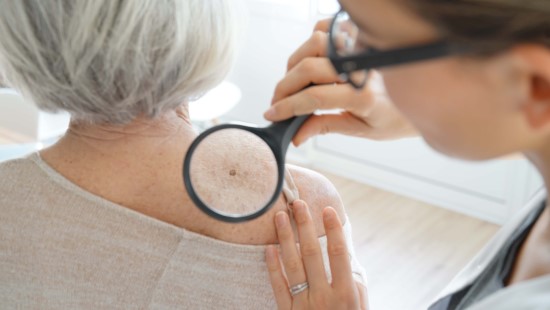
Our board-certified physicians from University of Maryland School of Medicine treat patients of all ages for the full range of dermatology needs, from skin disorders and cancerous lesions to general and cosmetic dermatology.
We are dedicated to improving the quality of life for patients afflicted with skin disease through innovative patient care, education and research.
Our physicians provide general dermatology services for conditions such as:
- Eczema
- Psoriasis
- Acne
- Pigmentary disorders
- Cancers of the skin
- Immunofluorescent examinations of skin
- Histopathologic diagnosis of skin biopsies
- Electron microscopy of skin biopsies
- Photochemotherapy
We also provide a comprehensive assessment and treatment of stings and bites. The Sting and Bite Program uses an integrated approach to identify specimens, examine patients, conduct appropriate immunological tests, treat wounds and identify preventive therapy for patients with stings and bites.
Dermatology Sections
- Dermatologic Surgery
- General Dermatology
- Dermatopathology
- Pediatric Dermatology
- Immunologic Dermatology
- Cosmetic Dermatology
Mohs Surgery
Mohs surgery is known to be the single most effective technique for removing basal cell carcinoma and squamous cell carcinoma, the two most common skin cancers. Mohs surgery spares the greatest amount of healthy tissue, while completely removing cancer cells. Cure rates for these two skin cancers are 98 percent or higher with Mohs — significantly better than the rates for standard excision or any other accepted method of removing skin cancer.
- Learn more about the signs and symptoms of skin cancer.
Our Mohs surgeon, Zaineb Makhzoumi, MD, MPH, has mastered the skill of leaving little to no scars after surgery. She is board certified in dermatology with extensive experience performing Mohs surgery.
To make an appointment to discuss Mohs Surgery, please call 667-214-1195.
- Learn more about Mohs Surgery for Skin Cancer.
Research
Through our residency program, we train the next generation of dermatologists and undertake clinical and basic science research to advance our understanding of skin disorders and improve treatment options. As part of an academic medical center, our physicians have access to continually updated research and conduct clinical trials to broaden the understanding of skin disorders and improve treatment options for patients.
Read more about our research initiatives.
Dermatology Locations
- University of Maryland Faculty Physicians, Inc.
5890 Waterloo Road
Columbia, MD 21045 -
University of Maryland Professional Building
419 W. Redwood Street
Baltimore, MD 21201