
Trauma Research
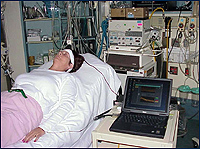 The R Adams Cowley Shock Trauma Center at the University of Maryland Shock Trauma research program aims to become the benchmark for national and international trauma research that addresses fundamental and major issues of injury in its broadest sense affecting prevention, patient care, delivery of care issues, public policy and financing of trauma care and systems of care.
Clinical Research Trials and Research Protocols
All clinical research trials must be reviewed by an internal research committee which ensures that each trial does not interfere with existing research protocols and ensures that the design works in concert with existing clinical operations.
The Shock Trauma Research Committee also reviews all research protocols for scientific merit and feasibility prior to Institutional Review Board (IRB) submission. Each trial must be approved by the IRB prior to implementation.
Research Program
The research program centers around:
- Clinical research trials
- Serving as a testbed for emerging technologies
- Developing collaboration with the Air Force through its C-STARS-MD (Center for the Sustainment of Trauma And Readiness Skills) program based at the Shock Trauma Center (and other branches of the military)
- Collaboration with the National Study Center and the Johns Hopkins School of Public Health on public policy initiatives.
Clinical research trials center on prospective and retrospective studies on resuscitation and treatment of the injured. The Shock Trauma Center serves as a testbed for emerging technologies such as telemedicine initiatives and military field testing of resuscitation and other clinical technology.
The R Adams Cowley Shock Trauma Center at the University of Maryland Shock Trauma has conducted a significant number of research projects over the past 12 months. All projects are designed with the objective of enhancing the trauma system's ability to resuscitate, stabilize and treat the trauma patient's needs.
Areas of Research
The areas of research cover all aspects of trauma patient care, from the prehospital setting to discharge. Previous research provides a view of the diversity of the Shock Trauma Center's research efforts in areas such as extra corporeal lung support, acute respiratory distress syndrome, hyperbaric therapy and soft tissue infections, extremity and pelvic trauma, advanced diagnostics as well as surgical and nonsurgical techniques for traumatic injury.
Ongoing Projects
These research efforts expand the knowledge base for all providers and strengthen the infrastructure of the state's trauma system. The following ongoing projects are examples of how the Shock Trauma Center seeks to advance the system's capabilities:
- University of Maryland, Baltimore has recently been named a Core Center in the Transfusion Medicine/Hemostasis Research Network by the National Heart Lung and Blood Institute (NHLBI). In collaboration with the Department of Pathology, the Shock Trauma Center will conduct research projects aimed at "Reducing Mortality from Acute Hemorrhage in Trauma", by studying methods designed to reduce RBC transfusions, control hemorrhage, and reduce mortality in trauma patients.
- The Shock Trauma Center is testing a novel system for the measurement of cerebral perfusion in head injured patients. The Brain Acoustic Monitor (BAM) is a noninvasive device capable of measuring blood flow to the brain without the need to drill a hole in the skull. It is compact, inexpensive, and suitable for continuous use. Under development in the STC since 1998, the BAM system may represent a revolutionary advance in the care of patients with mild and moderate traumatic brain injury.
- Multiple projects pertaining to predictors of infection and outcome in critically injured trauma patients continue to be spearheaded by the clinical research staff, and promise to have an immediate impact on the quality of care in the critical care setting.
- The Shock Trauma Center is participating in an ongoing study seeking to identify biological markers of sepsis in patient's blood, and to validate their ability to detect sepsis 24 hours or more prior to the onset of clinical symptoms. The goal of this study is to develop a clinical assay which will aid in the early diagnosis and management of sepsis.
- As a testbed for new technology, the Shock Trauma Center has become the first facility outside of South Africa to evaluate the use of a new low-dose, digital X-ray system that can take images of the entire body in 13 seconds. The device, called the Statscan Critical Imaging System, provides trauma doctors with critical information about a patient's injuries, saving critical time in the "Golden Hour".
Learn how Shock Trauma has partnered with the US Air Force to develop Smart Patient Care System Research
For more information, please visit the University of Maryland School of Medicine's website.