
Surgical Care
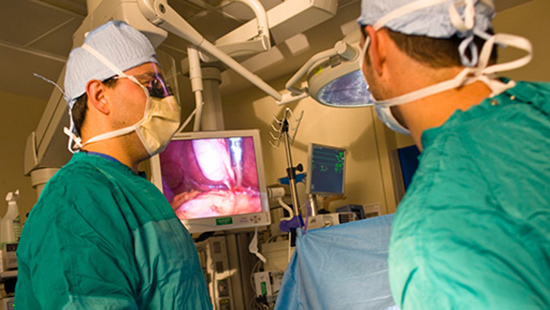
Our general surgeons are nationally respected pioneers in minimally invasive procedures.
We offer the most advanced treatment options for patients, and treat cases from routine to medically complex.
Our physicians' vast surgical expertise, combined with the resources of the UM Medical Center and our multidisciplinary approach, distinguish us as a first-rate center of excellence.
Patient Stories
Related Resources and Innovations
- Preoperative (Surgical) Services
- Center for Weight Management and Wellness
- Endocrine Surgery
- UM General Surgeons Making Pioneering Advances in Minimally Invasive Surgery
Location and Contact Info
22 S. Greene St.
Eighth Floor, Central Elevators
Baltimore, MD 21201
Phone: 1-800-492-5538 (patients) or 1-800-373-4111 (physicians)